
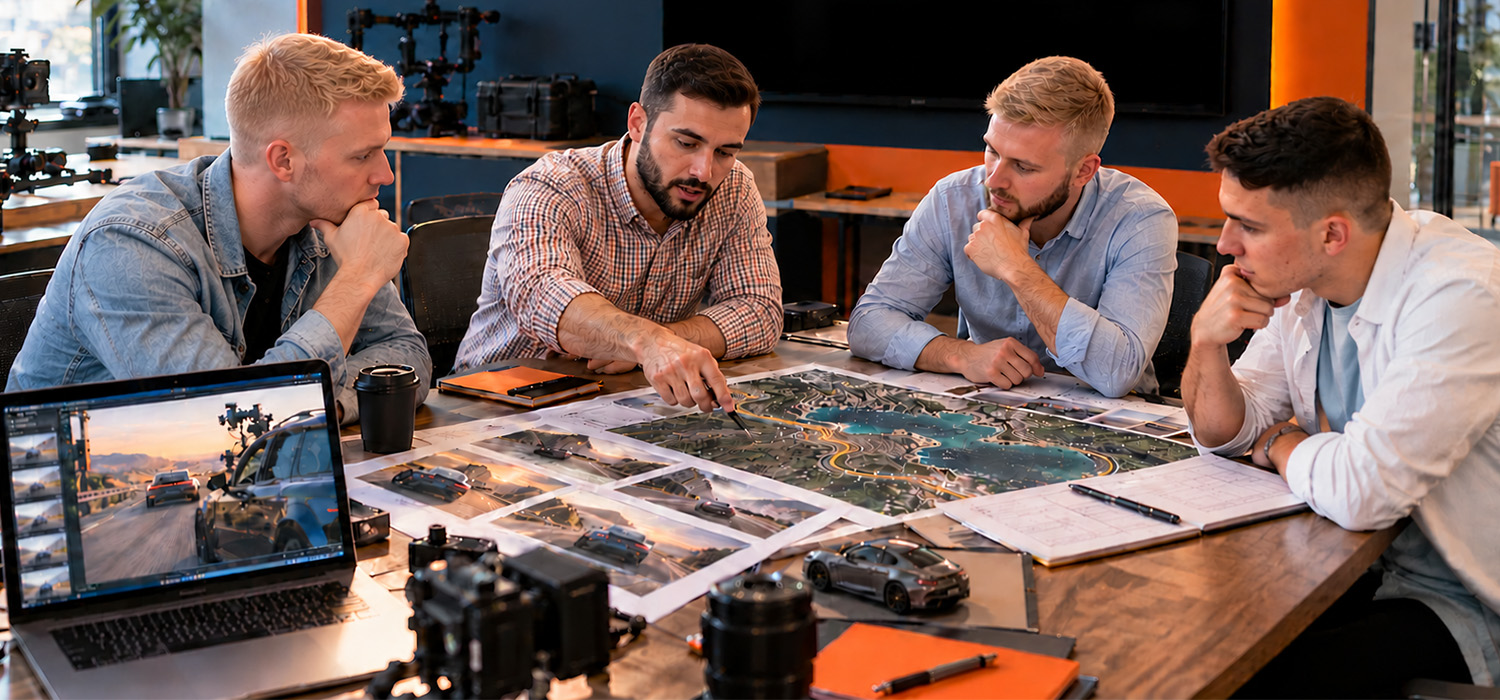
Planning a camera car shoot can get hectic, whether you’re filming on a sunny day or late at night. The crew needs to coordinate with the client and drivers, prepare the equipment, and get ready for each shot. Choosing the right camera setup and location helps the team capture the footage needed for a successful car commercial.
The issue with filming such footage is that it proves to be much more complicated than it appears. You have two moving vehicles, a real road, constantly changing light, other cars on the road, and, most of the time, a very tight schedule to follow. When there isn’t enough planning, crews may not finish all their planned shots before the light dies, or they try to rush through the process at the risk of others.
An effective car advertisement requires good shots, proper planning, and a great camera setup. Therefore, the choice of filming method is essential to show the movement and aesthetics of cars in various aspects. Using in-camera car filming services helps you capture smooth, professional tracking shot.
How Camera Car Filming Works
Camera car cinematography uses special mounts and stabilization tools to capture smooth videos of cars in motion. The camera can be placed inside or outside the car. The correct setup will provide you with smooth and interesting shots that will show off the visuals and performance of your car.
Good camera settings ensure footage looks realistic, while high resolution, such as 4K and 8K, will provide clear details. This gives a larger scope for editing to produce clear, professional-looking footage, which will make your vehicle look great.
Different angles create different effects. A low-angle shot makes a car appear to move at a greater speed, while a 360-degree camera with a hidden pole produces wide shots that don’t reveal any supporting structures in the video. Separate microphones allow the capture of engine and exhaust sounds. The correct choice of technology and settings can result in producing stunning commercial videos.
What to Prepare Before the Shoot
Before the shooting process, you should plan how you are going to shoot the video, get permission, prepare the car, and other members to organize the work. Preparation in shooting helps you save time and can do the things easily.
Objective
Consider the audience’s viewpoint when determining what will appeal to them. A luxury car commercial showcases style and comfort, while a truck commercial showcases power.
Make a shot list
Make the list before the shoot day. What are the shots you need to take? Such as a rear view or a side view of the car driving away. The important list will remain to take that shot.
Prepare the car
Wash your car inside and out, and check your tires, wheels, and badges. You will need to take your cleaning kit with you because you will need to get up close to the car, and fingerprints and dust will be visible.
Get permission
In some areas or on public roads, you will need approval. Find out what you need to do to get approval in plenty of time.
Plan and crew and Schedule
Before the shoot, set the roles: driver, camera operator, communicator, and share the shoot details with your team: time, places to film & contact details.
Plan for possibility
Weather can affect filming, so pick an alternative date or place to film if the weather is bad rain, wind, lightning.
Choosing the Right Camera Car Setup
The camera car setups depend heavily on the type of shots chosen for the brand, the road conditions, and the production requirements. Some setups will work better for close-ups as opposed to capturing wide cinematic shots.
A vehicle with camera mounts
You can attach the camera to the side, back, or top of the vehicle. This is ideal for tracking shots on highways and open roads.
A vehicle with a crane arm
A zoom camera attachment follows the model automobile while both vehicles are travelling together. This gives beautiful, wide shots but calls for a larger area, greater setup time, and a well-trained crew.
A trailer that carries the hero car
We can put the hero car on the back of a truck. We can get some nice close-up shots. The actor can focus on their performance.
Depending on the shots you want to capture, road conditions, time available, and the number of people. This will help when planning your shoot. It is an important consideration when making a full-scale production. From per-planning to filming.
If you are uncertain whether to hire a camera vehicle or a crew of owner-operators, you can evaluate some of their advantages as well as disadvantages in order to make the best choice. This will assist in organizing your route, scheduling, and choosing pieces of equipment and everything else.
Camera Car Route Planning and Safety
A good camera car route should be smooth, have light traffic, and be safe for stops and turning. The crew should also establish a clear safety plan before filming starts.
Choose the correct routes
Choose roads that fit your advert style. Winding roads work well with sports cars, and motorways work well for family SUVs.
Check your location before the shoot
Know which roads you have, the lighting, and where the shadows will fall. Often the best light will be one hour after sunrise and one hour before sunset.
Check local rules
Filming permissions and road closure rules will vary depending on where you are. Contact local authorities early so you know if you need any permissions or road closures.
Safety first
Have a safety meeting prior to filming. Make sure everyone knows what speed to drive at, spacing between vehicles, hand signals, and radio communication. Everyone should know their roles, and who has the right to stop filming if they feel it is unsafe.
Common Challenges During Camera Car Filming
Camera car filming can present several challenges that affect the shoot. Understanding how lighting can change, unwanted reflections, and variations over time can help you get shots that are easier to capture. This will help the crew prepare for a smooth shoot and edit.
Maintaining Consistent Lighting
Sunlight may vary during your filming. You will want to ensure that your car looks consistent in all of your shots. Before recording each shot, check the lighting.
Managing Reflections on the Car
The windows and shiny parts of the car can cause reflections of the crew, camera, and any surrounding items. To avoid unwanted reflections, adjust the camera angle and use appropriate lighting techniques.
Keeping Shots Consistent
The shots may look inconsistent if camera settings are changed or the car is moved. Keep a record of the camera settings and positions so that they can be repeated by the crew.
Capturing Clear Sound
Engine sounds and dialogue may be overtaken by background wind and road noise. Where possible, record key items of audio separately and ensure good quality.
Managing Reshoots
Missing shots or footage that doesn’t quite fit the brief can cause delays and extra costs. It’s a good idea to watch back some of your key footage while on set so you can spot any issues and get them fixed.
Conclusion
A successful camera car shoot starts with a good plan. The choice of necessary equipment, proper car preparation, and thorough route preparation allow filmmakers to avoid difficulties while filming. Footage review during the shoot makes it possible to detect problems at the earliest possible stage, which cuts down on the number of reshoots required. All of these actions help the crew take the necessary shots to create the final commercial.
Every car commercial has specific needs, and the right way to approach filming your advertisement depends on the description. Contact us if you have any queries about your upcoming shooting requirements.