
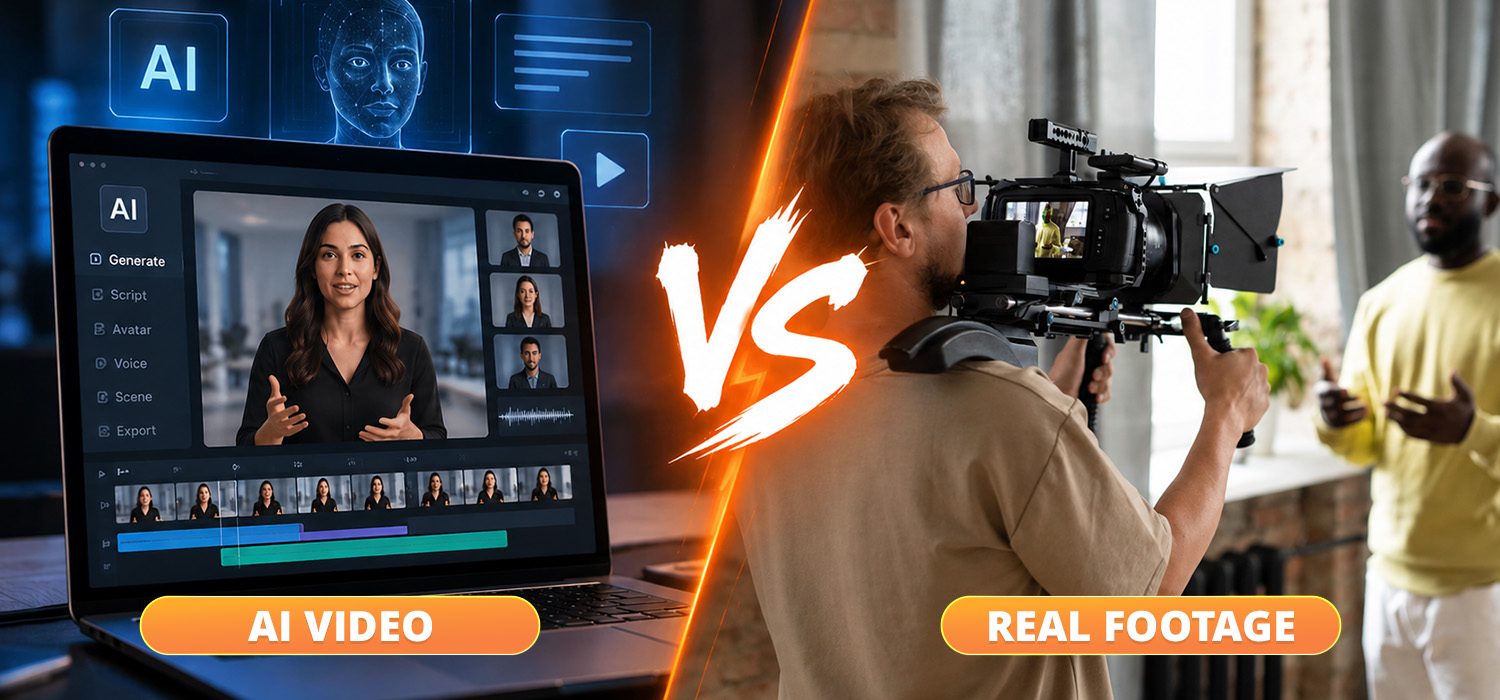
Creating videos using AI can be done quickly, in just a few minutes. However, will your audience believe it? If you are showing a real product and there is any small mistake, your audience will begin to doubt the video’s credibility. Although an original video takes longer, you are showing exactly what you are selling. Here is how to decide whether to use an AI video or real footage.
AI is becoming more important within video production. Many marketing teams are using AI-powered tools to create and edit their video content. The market is growing, with the global AI video generator market predicted to grow from $847 million in 2026 to $3.35 billion by 2034 at a compound annual growth rate of 18.8%. This isn’t to say that traditional filming methods won’t be used; however, brands will have to consider the best option for them based on their campaign objectives.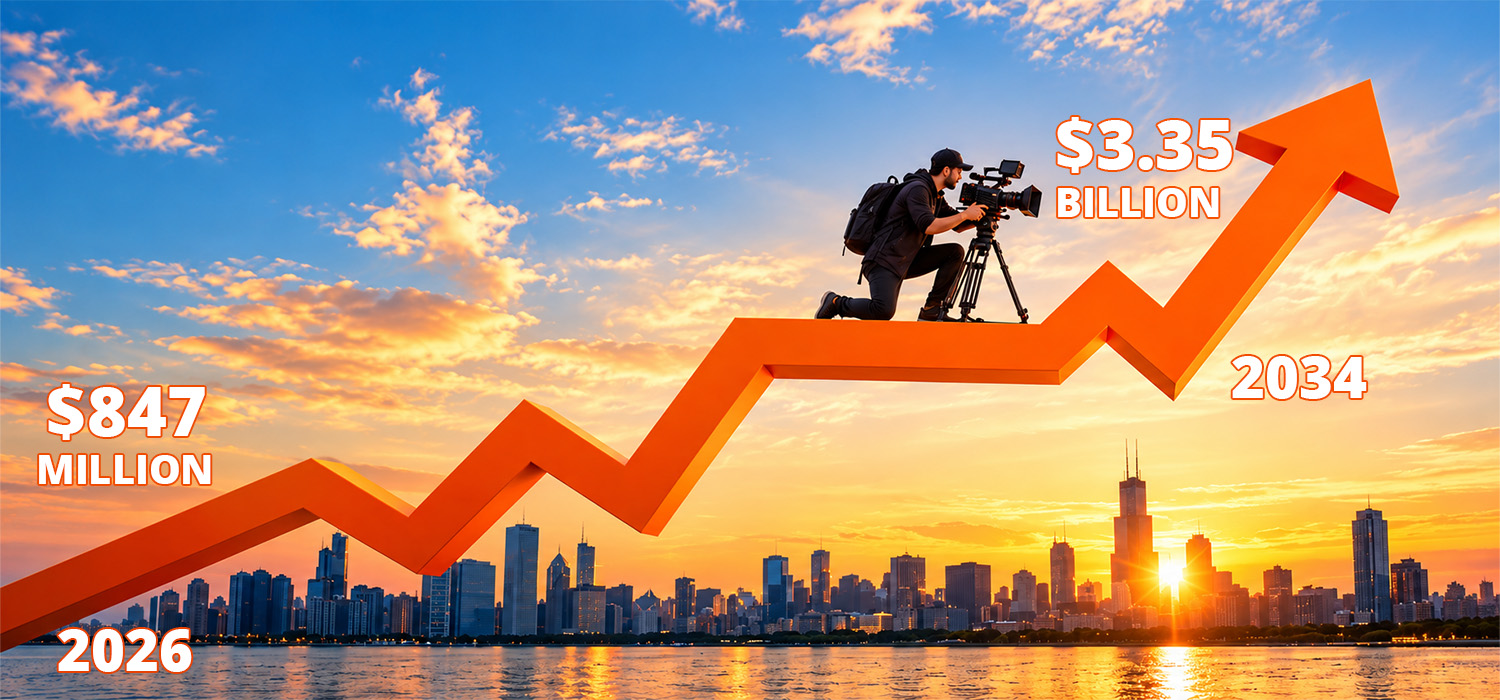
What is AI Video and When Does It Work Best?
AI video is a form of using artificial intelligence to create video clips based on prompts, images, and clips. Brands can use this to generate creative ideas, create quick videos, and experiment with different video styles.
When Does It Work Best
There are a variety of marketing ideas that can be brought to life using AI video.
Social Media Content
Create short videos, visuals, and content for your Instagram, TikTok, and YouTube channels.
Creative Ideas
Get creative with your ideas for the campaign and pick the best one to create your video.
Simple, logical explanations
Use visuals and animations to communicate information about services, processes, or business ideas.
Early Camping testing
Different visual styles and messages need to be compared before proceeding to the larger production.
Benefits of AI Video
Quickness
Groups have the opportunity to create a prototype without needing to complete a whole shoot.
Adaptability
There is an opportunity for marketers to experiment with diverse background designs, approaches, and setting concepts.
Simple changes
With advanced technology, alternative concept versions can easily be made.
Creative thinking
Creatives can turn innovative concepts into visuals that could be challenging or costly to make.
Limitations of AI Video
AI-produced content continues to face obstacles, especially regarding accuracy in visuals.
Differences
Product labels, logos, car designs, and other characteristics may differ across frames.
Unnatural behavior
Actions of hands, facial expressions, and interactions are sometimes shown in an unrealistic way.
Not enough control
Achieving the desired camera angle, movement, or physical action can take multiple tries.
Concerns about trust
AI-generated images lack some real-life problems found in videos.
AI video is beneficial when speed and creativity are key features. However, in advertising where product details or movements are paramount, traditional filming may prove to be a better option.
When is Real Footage a Better Choice?
Actual filming is done by using cameras to capture scenes of real people, products, vehicles, or locations. It is very beneficial for companies that aim to provide their customers with an idea of what to expect from the brand in real life.
Featuring Actual Products and Cars
Providing real examples and showing what a product actually looks like to help inform customers. A professional video will show all the design, colours, interior, and motion of a car to give a true representation.
Establishing Trust Among Customers
Using real people and products in videos will help build trust with brands. Using cinematic storytelling in your business will let you showcase who you are through realistic imagery.
Recording Real Activity and Places
There are some scenes in AI-created content that are not easy to recreate authentically. Some of the examples are moving from behind the wheel of a car while going down the winding road, the employees at a busy facility, or a camera filming the actual commercial space.
Record high-quality video that captures natural lighting and flow. Create cinematic aerial video of your property.
AI vs. Real Footage: Key Difference
Both methods can be used to help with marketing, but they serve different needs. Which method is best to use will be determined by factors such as the kind of content needed and the target audience’s requirements.
| Factor | AI Video | Real Footage |
|---|---|---|
| Visual Quality | Creates creative visuals but may look unrealistic. | Shows real people, products, and locations. |
| Product Accuracy | May change product details. | Shows actual product features. |
| Creative Control | Makes it easy to test different ideas. | Offers control over shots, lighting, and movement. |
| Audience Trust | Works well for creative concepts. | Builds trust through real visuals. |
| Production Time | Creates visuals quickly. | Requires planning, filming, and editing. |
| Best Use | Social media, explained, and concept videos. | Commercials, product videos, and brand stories. |
Both methods have positive and negative points. AI is a good method for thinking of ideas and simple graphics; however, traditional filming would give you a more accurate, realistic, and smooth result.
Choosing AI vs. Real Footage: What Should Brand Consider?
Businesses need to understand the needs of the video and how the information will be understood by the target audience before deciding on the production technique that they would utilize in the creation of the content.
What is the purpose of Video?
Begin with the purpose of the campaign. A short social media video meant to test a creative idea could be successfully made with the use of AI video technologies. A product advertisement, which must showcase actual features of the product, would require a different type of production technique a professional video shoot. The method of production needs to support communication rather than be prescriptive.
Does the Video Need to Show the Actual Product?
When customers need to understand a product’s features, size, color, and how it works, showing the actual product is the best approach. This is especially important in promotional videos and commercials, where accurate visuals help customers make informed decisions.
Who are you trying to reach?
Real footage shows how light changes across a building, how a car moves through a turn, and how a place really looks from above. AI can have trouble matching that natural motion. With cinematic drone coverage, viewers see the true size and surroundings of a location, not a guess at it.
How Will You Use this Video?
Look at your platform. Videos may need to be flexible for social media posts. High-quality graphics are often needed on the product pages and in the advertising campaigns.
Can AI Video and Professional Production Work Together?
Yes. Businesses can combine both approaches. AI can help develop ideas, create storyboards, and explore visual options. Professional filming can then bring those ideas to life with real people, products, and locations.
This allows teams to be creative while ensuring the main points are covered. Having knowledge of how video production works helps firms coordinate the work from generating ideas to camera operation. Full-scale video production is created for projects that include many production stages.
Conclusion
The choice between AI video and live action video is dependent upon one’s marketing aims, target audience, budget, and the time available to prepare the audiovisual material. The first option, AI, assists a business in producing videos in a short period of time and is highly creative. It is sufficient to realize that real videos are superior to AI videos in terms of representing a product and its features naturally and accurately. Moreover, it will be even better to use both methods in order to get the advantages of both options.
The right video approach helps your brand deliver a clear message and connect with your audience. Planning a product video? Contact us to discuss your ideas, production needs, and creative goals.