
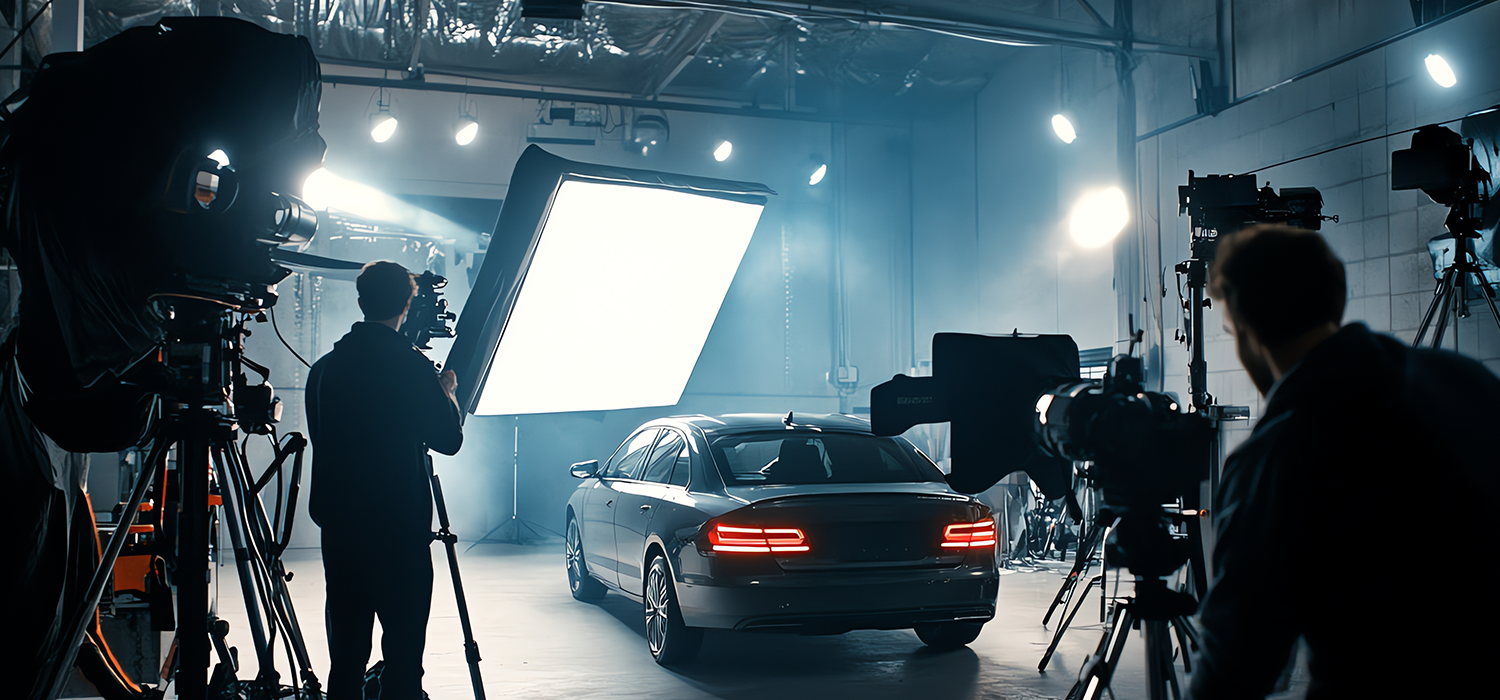
Automobile manufacturers and car brands create commercials for different reasons: launching a new vehicle, running a seasonal promotion or building a new brand campaign. An in-house team can handle some shoots. Larger projects usually need professional video production, with more planning, better equipment and an experienced crew. It comes down to what the video is for, where it will run and the quality you want.
The first car ad was a magazine ad in 1898, and by 1914 Ford’s advertising team had bought a movie camera. Print and TV became the big moneymakers for cars, and commercials grew into full productions. Each new medium raised the bar for how a car had to look on screen.
Then buyers moved online, and the whole game changed. People now discover a car, engage with it and act, all through video. Over 75% of auto shoppers say online video has influenced their shopping. According to the 2026 report, 92% of drivers research online before buying a car, and 78% of people watch video reviews. That makes a car commercial one of the first ways a buyer sees a vehicle, and the quality of your video shapes how they see both the brand and the car.
The difference becomes clear when a project needs more than basic filming. A full-scale production service brings together the creative process, equipment, crew and editing in one place. That is especially useful for larger automotive projects.
How to identify when your Auto Brand Needs Professional Commercial Production
Once you know why the video matters, the next step is understanding when a project needs professional support. Here are four situations where it can make a difference.
When Launching a New Vehicle Model
Launching a new vehicle requires a professional automotive commercial because the video may be the first impression a buyer gets of the car. The video must showcase the car’s design features, and overall driving experience. A car commercial is going to be featured on the website, social media channels, screens at dealerships and in advertising. Production must be completed before the launch date, requiring long-term planning.
When Running a Major Marketing Campaign
A big campaign requires a consistent image and message across all channels. A well-planned shoot can yield everything needed for the main ad, but also short clips, images and content for social media. This keeps the campaign uniform and allows more content to be released. To learn how one shoot can become a full campaign, check out our guide on how to turn one car video shoot into a full marketing campaign.
When Building or Refreshing Brand Identity
When a company does a re-branding or changes its image, this is the perfect moment to re-establish what the brand looks like on video. Professional production makes sure your videos match the brand’s message, style and personality, so everything feels unified. A change in brand identity can be hard to understand if the videos and the brand’s new image don’t match.
When Your Current Videos Aren’t Delivering Results
In situations where videos receive few views, low engagement rates or no inquiries, the problem often lies in the planning or execution. Each video should be considered in terms of what its purpose was and what it was able to achieve. If videos keep missing their goals, professional video production can make your message clearer and more effective.
When a Simpler Video May Be Enough
Not all videos need full production setups. If you are just doing a fast update or a quick behind-the-scenes clip, basic filming equipment may be enough. In such cases, speed and a personal touch are more important than an expensive look.
A simpler video usually works when:
- The video will be short-term and not reused.
- It is part of a bigger project and not the core message.
- The goal is to stay active on social media between larger releases.
The key is to match the video to its purpose. A straightforward video is appropriate for a short update, but a vehicle launch or a major advertising campaign requires more preparation and quality.
Common Mistakes Brands Make When Deciding on Professional Video Production
Brands often start too late. Some also don’t plan for everything the video needs to do. Here are the most common mistakes they make, and how to steer clear of them:
Waiting Until the Last Moment
If you have just one week to produce the video, there isn’t enough time for planning, location selection, scheduling, or editing. As a result, the final video may lack quality. Start planning as soon as the launch date is set.
Assuming One Video Is Sufficient
A single video is not enough to cover a website, social networks, car dealerships, and advertisements without some additional videos and material. Take the time to think about those short video clips, photos, and vertical versions you will need, and plan for these moments before the shooting process starts, rather than afterwards.
Starting Without Clear Goals
Without understanding what you plan to achieve through your video, be it brand awareness, inquiries, or buzz around the launch of a product, you can’t tell if your video worked. Write your goal down in one sentence before doing anything else.
Ignoring Audience Needs
A video you like may not appeal to your target audience. Knowing the audience is of critical importance. Talk with a few people who actually buy cars, such as recent buyers or dealership staff, and ask what they would like to watch.
Leaving the Video Out of the Wider Plan
A video that isn’t tied to the launch date, advertising campaign or social media channels often goes out too late or gets no promotion. Make sure everyone involved knows the release timeline.
If you plan appropriately from the start, you will be able to avoid most of the problems associated with a lack of direction and target audience.
Is Your Brand Ready? What to Bring to the First Conversation
Every location in this story rewarded the crew that planned ahead. The same goes for every brand. Here are the signs you’re ready for professional production:
- You have an event with a fixed date, and the video must be ready.
- One video has to work across social media, your website, ads and dealerships.
- Your footage looks weaker than your competitors’.
- Your message needs a full story, not just pictures of the car.
- You want the video to stay useful for longer.
If two or more sound familiar, a professional shoot is worth planning. Then come prepared with:
- Your goal: the aim of the video, in one sentence. Examples are a vehicle launch, a campaign or a rebrand.
- Your audience: first-time buyers, business clients or repeat buyers. A luxury buyer and a truck buyer need very different stories.
- Your timeline: the finish date and any fixed dates, such as events or campaign launches. Shooting, editing and approvals all take time.
- Where it will run: a main commercial, short social clips and vertical cuts each need planning from day one.
- Your vehicle details: the model, trim, colour and special features to show. This avoids mistakes on shoot day.
This is the conversation we want to have with you. Whether the shoot is in Los Angeles, Kansas City, Las Vegas or anywhere nationwide, these answers let our team work from concept through final delivery without going back and forth.
Conclusion
Professional video production is worth it when the video has to introduce a vehicle, hold a campaign together or show who your brand is. For quick updates, a simple video does the job. Whichever you choose, planning early makes the biggest difference, so prepare in advance, understand your audience and decide what content you need for your website, social media and dealerships.
Ready to make your next vehicle video count? Contact HighShot Cinematics now so that we can review your objectives, your schedule, and your vision. Our team will be there to plan a commercial that presents your vehicle at its best to potential customers.