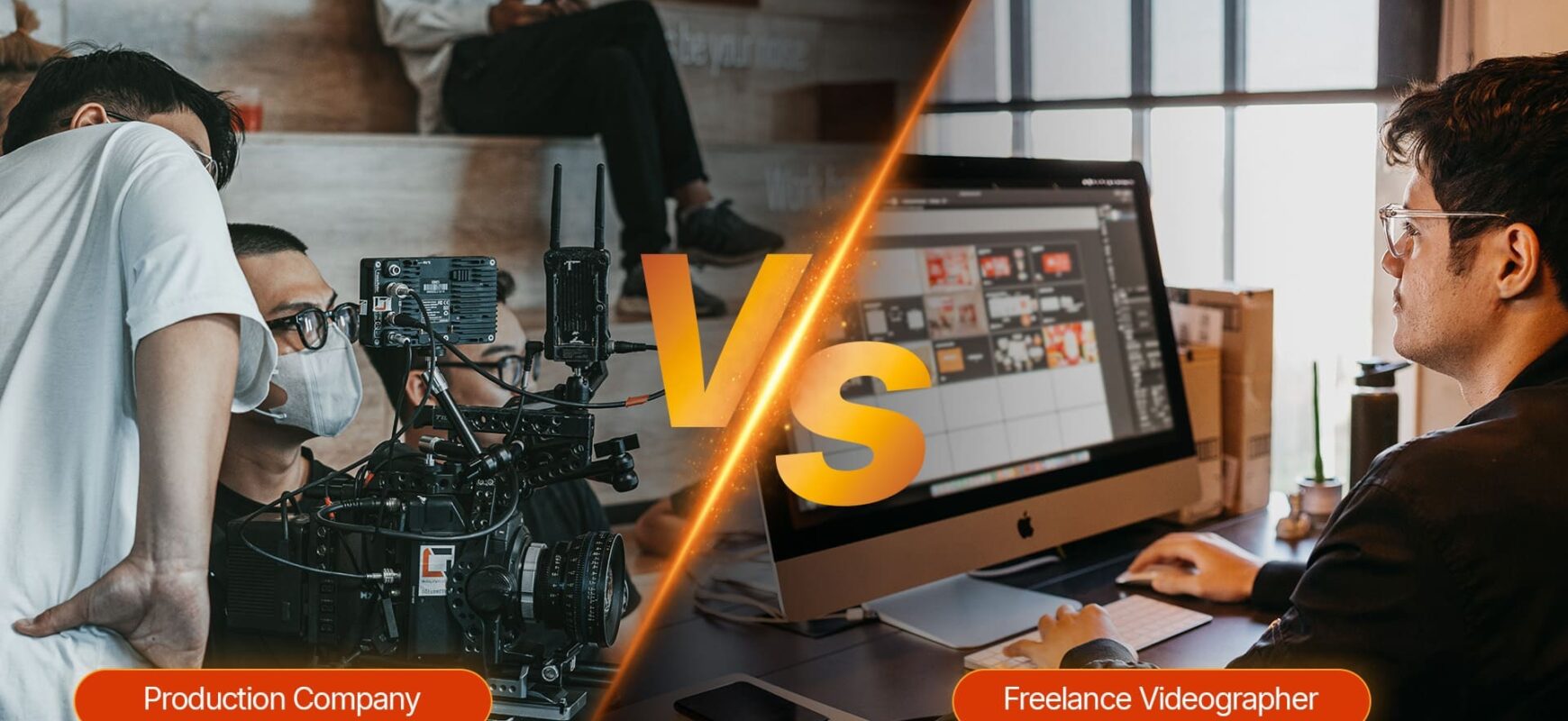
Hire a freelance videographer when the video is simple and low-risk, and a production company when the result has to be right the first time. That is the short answer. The longer one depends on what you are making and what is riding on it.
Both options can produce excellent work. The difference is what you are actually paying for. A freelancer gives you one skilled person. A production company gives you a team, a process, and a single point of accountability.
This guide explains what each one offers, where each fits best, and how to decide for your next project.
What a Freelance Videographer Offers
A freelance videographer is one person who plans, shoots, and usually edits your video. Many are experienced specialists with a strong personal style.
The main advantages are:
- Lower cost. One person and one set of equipment means less overhead.
- Direct communication. You speak to the person who will hold the camera.
- Flexibility. Freelancers are often easier to book for short shoots and quick turnarounds.
- A distinct look. If you like their past work, you know roughly what you will get.
The limits come from being one person. A freelancer can run only one camera at a time and carries a limited kit. There is also no backup if they fall ill or another job overruns.
On larger projects, many freelancers hire other freelancers to help. That can work well, but the crew has been assembled for your job and may never have worked together before.
What a Production Company Offers
A production company is a standing team with defined roles. A producer manages the plan and the budget. A director shapes the creative, a crew handles camera, lighting, and sound, and editors finish the film.
That structure adds five things:
- Capacity. Multiple cameras, larger crews, and specialist tools such as drones or camera cars.
- Process. Pre-production planning, shot lists, schedules, and a clear review stage before delivery.
- Reliability. If a crew member or a piece of equipment fails, there is a replacement.
- Accountability. One contract covers concept, shoot, edit, and final files.
- Consistency. The same standards apply across every project and every location.
Post-production is also handled by specialists. Editing, color grading, and sound design are separate skills, and a dedicated team for each stage usually shows in the finished film.
The trade-off is cost and lead time. More people and more planning mean a higher budget, and the work usually needs to be booked further ahead.
Freelancer vs Production Company at a Glance
The table below compares the two on the factors that matter most to a brand.
| Factor |
Freelance videographer |
Production company |
| Team |
One person, sometimes with hired help |
A dedicated crew with defined roles |
| Budget |
Lower |
Higher, covering crew, equipment, and planning |
| Equipment |
Personal kit |
Cinema cameras, lighting, audio, and specialist rigs |
| Planning |
Light and informal |
Structured pre-production |
| Scale |
One camera, usually one location |
Multiple cameras and locations |
| Backup |
None if the freelancer is unavailable |
Spare crew and equipment |
| Post-production |
Usually the same person |
Dedicated editing, color, and sound |
| Best for |
Simple, low-risk content |
Campaigns and high-stakes shoots |
Compare Quotes Like for Like
A freelancer’s quote will almost always be lower, but check what it covers. Ask both sides whether the price includes pre-production, additional crew, equipment rental, music licensing, and revision rounds. A low quote that leaves these out can end up close to a full production price once the extras are added.
When a Freelancer Is the Right Choice
A freelancer is often the smartest use of budget when the video is simple and a reshoot would not hurt you. Typical examples include:
- Short social media clips and behind-the-scenes content
- A single interview or customer testimonial
- Coverage of a small event
- Internal videos such as training or team updates
- A first test of video before committing a larger budget
A freelancer also works well when you already have creative direction in-house. If your marketing team writes the script and manages the schedule, you may only need someone skilled to shoot and edit.
The main risk is dependence on one person. Build some slack into your deadline in case their schedule changes. Check their portfolio for work similar to yours, and agree on deliverables, deadlines, and revision rounds in writing.
When You Need a Production Company
A production company is the safer choice when the video carries real weight for your brand. That usually means one of these situations:
- Brand commercials and paid campaigns. The video will run in front of a large audience and must reflect your brand at its best.
- Complex shoots. Multiple locations, moving vehicles, aerial footage, actors, or large sets need coordination.
- One-chance moments. Product launches, live broadcasts, and major events offer no second take.
- Projects without a script. You know the goal but need a team to develop the concept.
- Ongoing content in several cities. You need the same quality wherever the shoot takes place.
This is where a
full-scale production service earns its cost. One team carries the project from concept to final delivery, so nothing is lost between planning, shooting, and editing.
The budget is higher, but so is the cost of getting these projects wrong. A failed shoot day or an off-brand commercial is far more expensive than the difference in fees.
Five Questions to Ask Before You Decide
Answer these five questions honestly and the right option usually becomes clear.
1 . What is the video for? An organic social post can be simple. A commercial, homepage film, or paid ad needs a higher standard.
2. How complex is the shoot? Count the locations, cameras, and people on screen. The higher the numbers, the more crew you need.
3. What happens if something goes wrong? If a reshoot is impossible or expensive, you need backup crew and equipment.
4. Who will manage the project? Someone has to plan, schedule, and direct. If your team has no time for that, a producer is worth paying for.
5. Is this a one-off or ongoing work? For regular content, a consistent team protects your brand’s look over time.
If most of your answers point to simple, flexible, and low-risk, start with a freelancer. If they point to scale, complexity, or high stakes, a production company is the better fit.
The Bottom Line
Neither option is better in every case. A freelance videographer suits simple, lower-risk videos where budget matters most. A production company suits work where quality, scale, and reliability cannot be left to chance.
Many brands use both. They rely on a freelancer for everyday content and bring in a production company for campaigns, launches, and anything that defines how the brand is seen.
Still not sure which side your project falls on?
Contact us and tell us what you have in mind. We will help you work out what the project actually needs.